

The Castle of Monsanto

Photo: Salomé Reis
The climb to the castle of Monsanto, given its location, feels like a challenge almost humanly impossible to achieve because it seems unattainable, yet it's enticing. The trek is a mix of the thrill of conquest and fatigue, compensated by the panoramic view that gradually expands in our field of vision...
The climb to the castle of Monsanto, given its location, feels like a challenge almost humanly impossible to achieve because it seems unattainable, yet it's enticing. The trek is a mix of the thrill of conquest and fatigue, compensated by the panoramic view that gradually expands in our field of vision. The village recedes, taking on new forms, in a dynamic where the observer lifts their head in search of the castle, looks down delighting in the initial reference, increasingly smaller and clustered, and turns their head to all possible horizons, edged by mountains. After conquering the steep ascent with its austere and unyieldingly lofty castle, we want to recreate, appealing to imagination, all the events that might have occurred there…
After the Reconquest of the Tagus line in 1149, following the Ponsul River, where the construction of various castles formed a barrier against Muslim incursions, Monsanto was one of the first fortified places, built over a previous Muslim castle.
D. Afonso Henriques (1112-1185) took control of this region, where the border with the Kingdom of León and the Almohad Caliphate was established. To guard it, the domains of Idanha-a-Velha and Monsanto were granted to the knights of the Order of the Templars with the responsibility to repopulate and defend them.
The construction of the Castle of Monsanto is attributed to this period, in 1165, when the Castle of Monsanto was first built under the guidance of the Master of the Order, D. Gualdim Pais, when it would have featured a keep at the center of the parade ground, surrounded by walls similar to those we can still observe at the Castle of Almourol, Castle of Pombal, or Castle of Tomar, its contemporaries. Destroyed in the wars with the Kingdom of León, it was rebuilt and substantially fortified by D. Sancho I, who repopulated the settlement and in the scope of this operation in 1172 returned it to the Crown. Later, the sovereign would have donated these domains and its castle to the Order of Santiago.
It is a fortress never conquered, even after a prolonged siege by the forces of D. Filipe IV of Castile in the 17th century, during the Philippine domination of the Portuguese crown. In the 18th century, it was again besieged by English forces supporting the campaign of the infante D. Pedro against his brother D. Miguel, yet it was never taken. In the 19th century, it was partially destroyed by the accidental explosion of the ammunition depot, struck by lightning during a storm.
All that remains are two towers and the ruins of the Chapel of S. Miguel, on the northeast slope of the castle, dating from the 12th century. Around it, the medieval settlement core of Monsanto was born. This temple consists of a single nave and chancel, and its facade features a round arch portal.
Within the walls and next to the castle stands the chapel of Sta. Maria do Castelo, a simple temple, datable to the 18th century, composed of a nave and chancel, with differentiated coverings. The main facade is bordered by pilaster-shaped corners, topped with a gable with a Latin cross at the apex and is pierced by a depressed arch portal and has, on the right side, a small barred window.
Visiting the castle of Monsanto is an upward journey that transports us to the ends of time and geographical horizons.
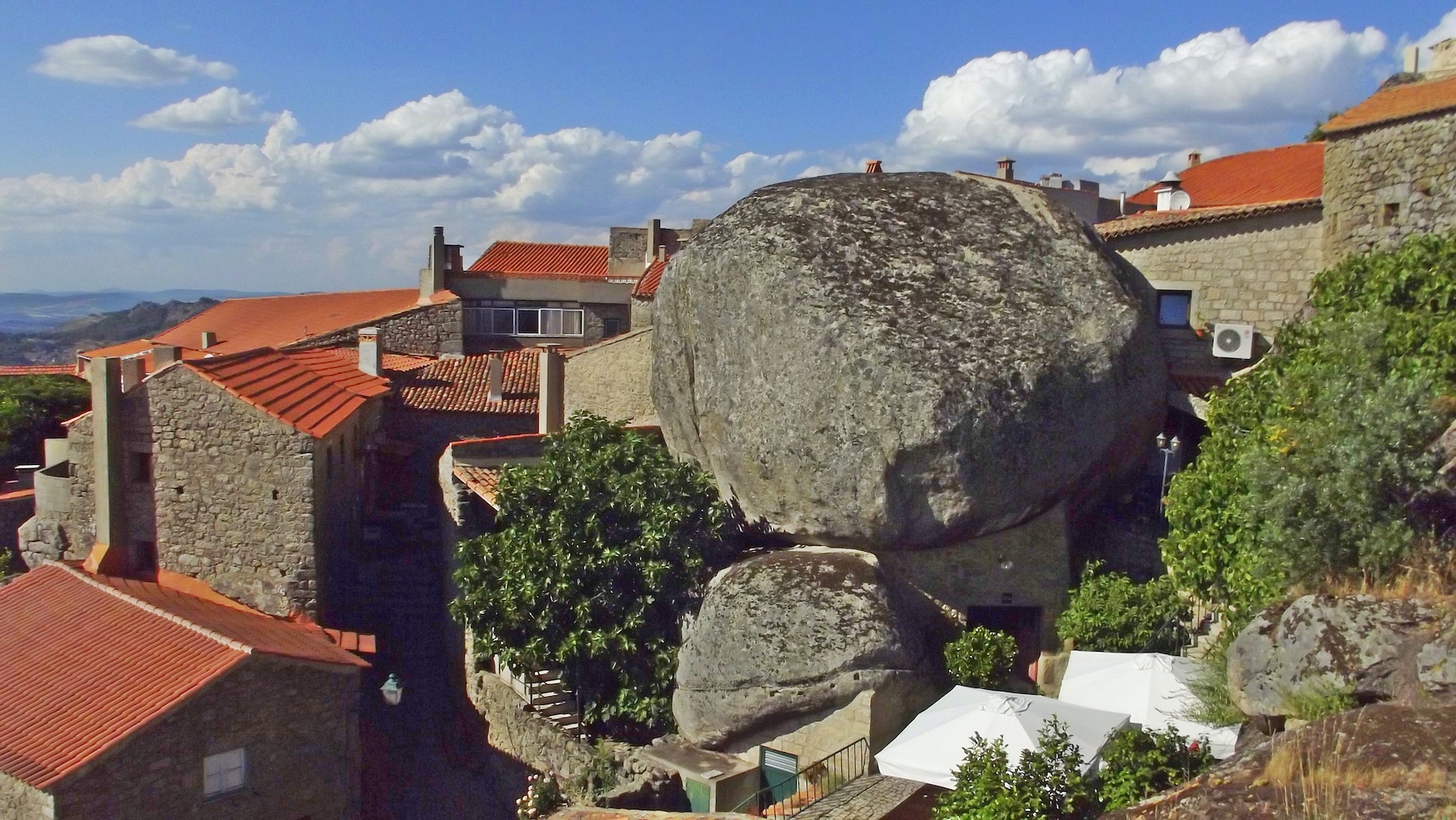
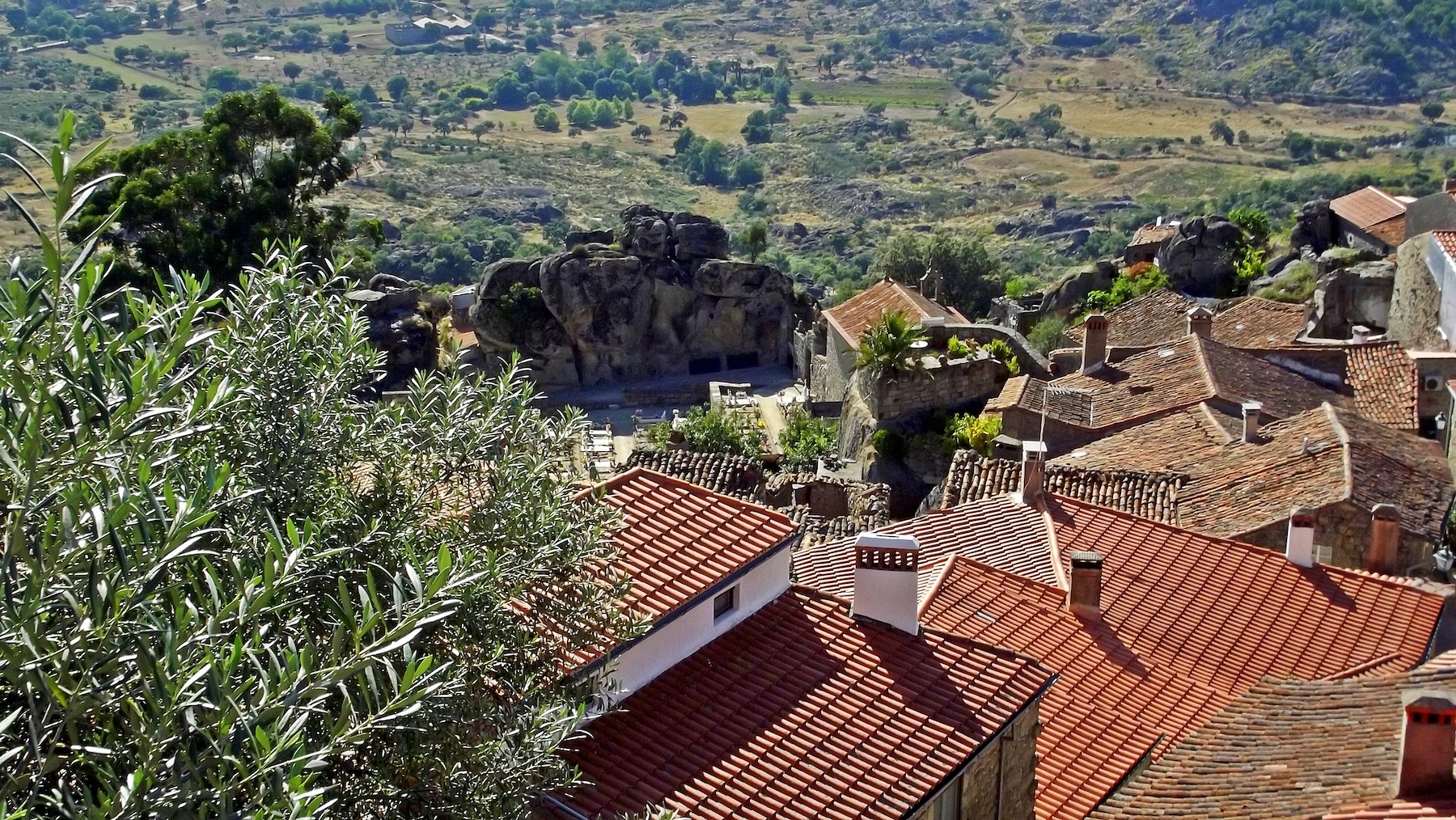
The climb to the castle of Monsanto, given its location, feels like a challenge almost humanly impossible to achieve because it seems unattainable, yet it's enticing. The trek is a mix of the thrill of conquest and fatigue, compensated by the panoramic view that gradually expands in our field of vision...
Views on this article
0 comments
Leave a comment
Your email will not be published. Required fields are marked with (*).
