

University of Coimbra: A Pillar of History and Knowledge
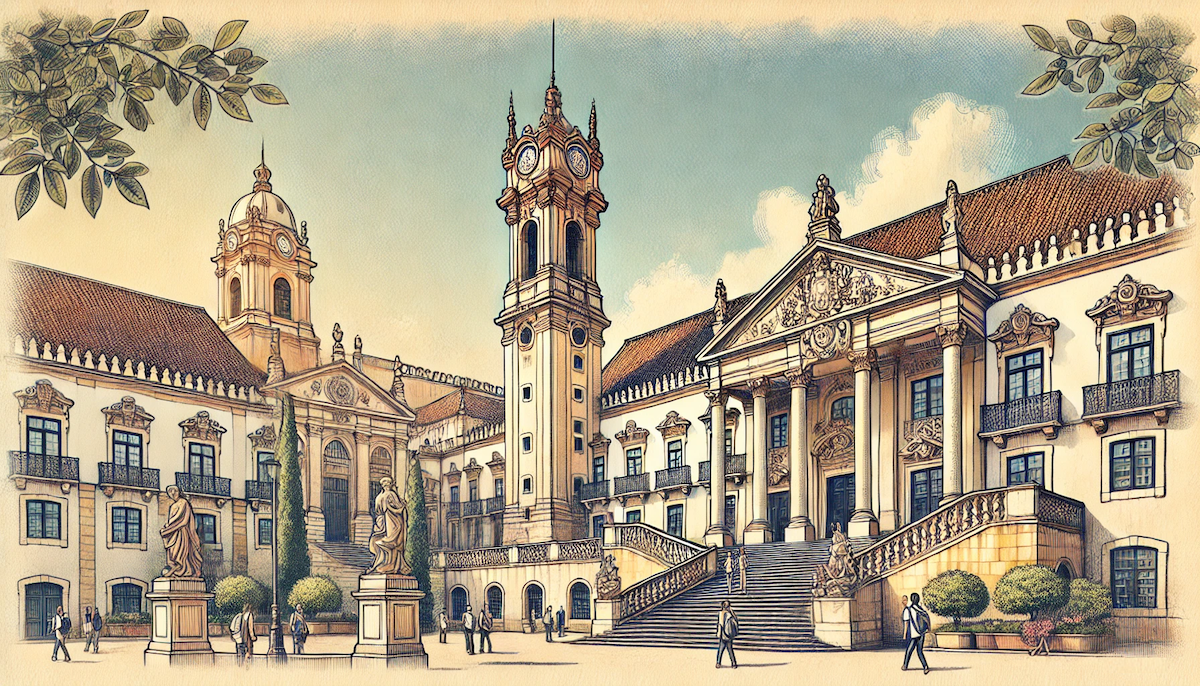
The University of Coimbra, located in the city of Coimbra, Portugal, is one of the oldest and most prestigious educational institutions in the world. Founded in 1290, during the reign of King Dinis, it plays a fundamental role in the history of higher education in Portugal and Europe. Over more than seven centuries of existence, the university has been a center of academic and cultural excellence, where tradition and innovation walk hand in hand.
History and Founders
The University of Coimbra was originally established in Lisbon but was transferred to Coimbra in 1308, where it remained intermittently until it settled permanently in 1537. King Dinis's decision to found a university was motivated by the need to train a ruling class capable of administering the Kingdom of Portugal, which was expanding at the time. Thus, the University emerged as a way to consolidate knowledge and training in the fields of Law, Medicine, Arts, and Theology.
The university has undergone significant changes over the centuries, with different phases of expansion and development. The Pombaline Reform, promoted by the Marquis of Pombal in 1772, was an important milestone in the modernization of the institution, with the introduction of new courses and the reorganization of teaching, which brought the university closer to the European standards of the time.
Architectural and Cultural Heritage
One of the most striking aspects of the University of Coimbra is its architectural and cultural ensemble, reflecting centuries of history. The main campus, known as Alta Universitária, was classified as a UNESCO World Heritage Site in 2013. Among the most iconic buildings is the Biblioteca Joanina (Joanina Library), built in the 18th century, a magnificent example of Portuguese Baroque and considered one of the most beautiful libraries in the world.
Another highlight is the Torre da Universidade (University Tower), built in the 18th century, which offers a panoramic view over the city of Coimbra. The Faculty of Law, located in the former Royal Palace, maintains a spirit of tradition and solemnity, with its cloisters and halls where important academic ceremonies are held.
Academic Traditions
Academic life in Coimbra is permeated by centuries-old traditions. One of the most well-known is the Queima das Fitas (Burning of the Ribbons), a celebration that takes place annually in May, marking the end of the academic year for graduating students. During this festivity, students burn the ribbons representing their courses in a symbolic ceremony of transition and farewell to university life.
Another famous tradition is the Praxe Académica (Academic Tradition), a set of initiation rituals for new students, often characterized by the wearing of the capa e batina (cape and cassock), an outfit symbolizing pride and respect for the university's history and values. Student life in Coimbra is also marked by the tunas, musical groups composed of students, who enliven events and contribute to the city's cultural richness.
Contributions to Science and Culture
Over the centuries, the University of Coimbra has educated some of the brightest minds in Portugal and the world. Among its alumni are figures such as the poet Luís de Camões, the mathematician Pedro Nunes, the physician and naturalist Garcia de Orta, and the philosopher Antero de Quental, among many others.
The university has maintained an active role in the development of science, culture, and technology. Its faculties of Sciences and Technology, Medicine, Arts, and Economics are internationally recognized research centers, promoting the advancement of knowledge in diverse areas, from the exact sciences to the humanities.
The University of Coimbra maintains a strong connection with the international community, welcoming students from various parts of the world and promoting academic exchanges. It is also the venue for important conferences and scientific events, reinforcing its role as a global center of knowledge.
Conclusion
The University of Coimbra is not just a place of learning but a living symbol of Portuguese history and culture. It combines respect for its centuries-old traditions with a constant commitment to innovate and adapt to the challenges of the present and future. For many, studying in Coimbra is a unique experience, in an environment that breathes knowledge and history at every corner. Thus, the University of Coimbra continues to play a crucial role in the country's development and contributes to the formation of generations of leaders, thinkers, and innovators who impact the world.
The University of Coimbra, located in the city of Coimbra, Portugal, is one of the oldest and most prestigious educational institutions in the world. Founded in 1290, during the reign of King Dinis, it plays a fundamental role in the history of higher education in Portugal and Europe. Over more than seven centuries of existence, the university has been a center of academic and cultural excellence, where tradition and innovation walk hand in hand.
Views on this article
1 comments
Leave a comment
Your email will not be published. Required fields are marked with (*).

Filipe Mello Araújo
2026-03-07 17:07:21Eu me lembro da época em que andei na Universidade de Coimbra nos anos 80... Foi a melhor época da minha vida...